
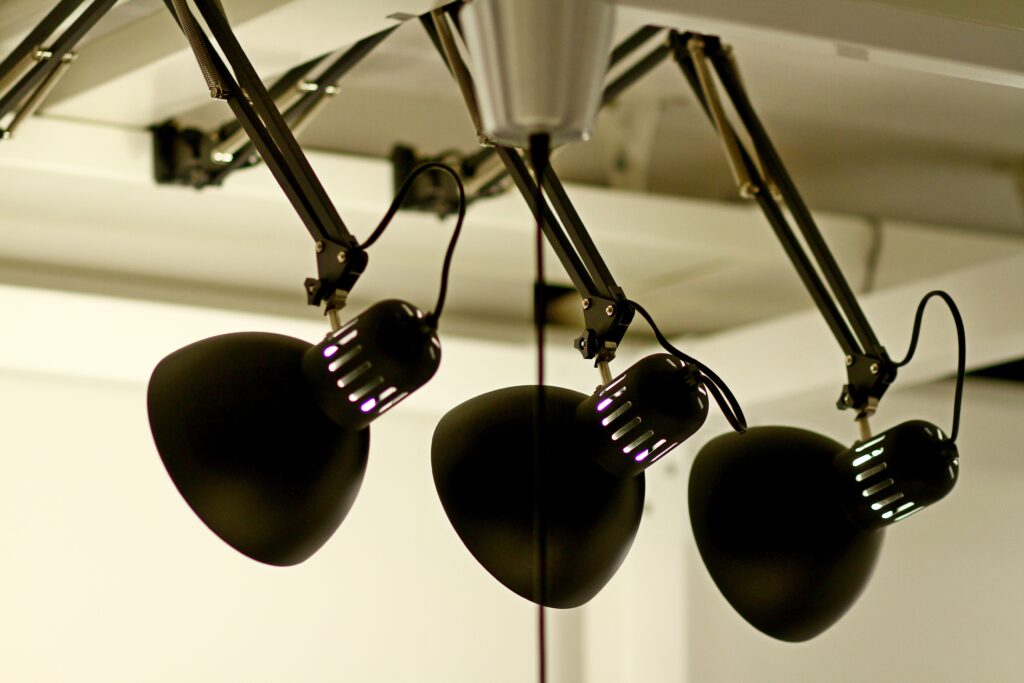
Småland – cradle of (Swedish) design
For many people it is Smaland Synonymous with the large bin of colorful balls. Yet it's much more than just the playground of the yellow-and-blue furniture giant: it's the cradle of Swedish furniture and glass design. I toured several design locations in this southern Swedish province. And yes, IKEA is among them.

Älmhult
Once we cross the Øresundsbron – the Øresund Bridge, the famous bridge between Denmark and Sweden – it's another two-hour drive to Älmhult, in the province of Småland. Here, in this Swedish town, Ingvar Kamprad opened his very first IKEA store in 1958. The enormous building still stands. Since 2016, it has been home to the IKEA Museum established. A cheerful museum with a serious undertone. Sweden used to be a poor country: people lived in small houses on cold, rocky ground that yielded little. The poor conditions in which young Ingvar grew up made him resourceful. As early as 1943, he started his first business. He named his company after his own name, the name of the farm where he lived (Elmataryd), and his hometown (Agunnaryd): IKEA.
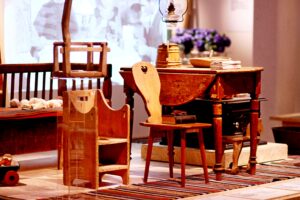
Even today, IKEA's Swedish roots are visible. The familiar colorful rugs, for example. While we use them for decoration now, in the 1940s and 1950s, furnishing small, cold homes with hand-woven rugs was a sheer necessity for Swedes. IKEA's practicality and compact living also stem directly from this history. Folding cabinets, extendable tables, stackable furniture, and storage systems are still part of the furniture giant's collection, where "democratic design" is the philosophy.
See how it works here IKEA Museum looks from the outside and inside.
Kosta
It's no wonder that Sweden has so many furniture makers: there are plenty of trees. We drive through what feels like an endless forest via Växjö to eastern Sweden. Trees, and therefore wood, were in plentiful supply. And that wood was also indispensable for the eighteenth-century "glaziers" in the region. They needed it to fire their furnaces. In 1742, two Swedes started a small glass factory in the village of Kosta. They lacked any knowledge of glassblowing; they brought in the experts of the time from abroad, from Bohemia. What began as a small factory making windows, glassware, and bottles grew over the following centuries into a world-renowned industry: Kosta BodaMeanwhile, the Swedes had copied the glass-blowing art of Bohemia and refined it to perfection and artistry.
Glass design
While "bruksglas" (Bruks glass) is still being made, Kosta Boda is primarily known for its glass art. We're amazed by the Kosta Boda gallery/mini-museum and the nearby hotel. We also can't resist the shop on the same premises. Now we just hope the two glass-designed bags survive the trip. We quickly discover that glassblowing is a true craft during a workshop with a genuine Kosta Boda glassblower. The final result from the kiln is ours to take home. Two misfires are now hidden away in the house. But yes: they are truly Kosta Boda, signed and all.
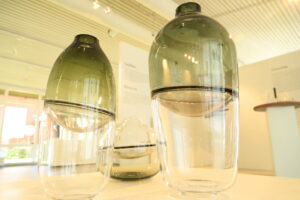
Glass tower in Småland
Kosta Boda is the oldest, largest, and most famous glassworks in Sweden. But certainly not the only one. Of the dozens of glassworks that Småland once boasted, thirteen remain. Most are located between Växjö and Kalmar, which is why the region is also known as "Kosta Boda."glasriket(Glasrijk). We bump along a forest path to one of those remaining factories. Here, one of the world's best glassblowers works in peace on his artwork. Jan-Erik Ritzman was a designer at Kosta Boda for twenty-five years, but has been working for himself for years.
He shares his knowledge during glassblowing classes around the world, from America to China. We meet the glass artist in his studio and small factory in the woods of Transjö, just south of Kosta. The most beautiful works are displayed in the shop, the less perfect—but still stunning—lie ingloriously in the trash: "I'm a perfectionist," says Ritzman.


Varnamo
After Kosta Boda, we typed Värnamo into our car's navigation system. The city is located in the north of the province of Småland and is considered a center of furniture design. This is where Gerrit Rietveld of Sweden lived and worked. Bruno Mathsson (1907-1988), fifth-generation furniture maker, master of functional design, 'inventor' of the single-strap seat, and architect of glass houses. Completely unknown in the Netherlands, and I must confess: I didn't know the man either. But what – for that time – sensational furniture he designed.
The Museum of Modern Art (MOMA) in New York included his chairs in exhibitions as early as the 1940s. His designs are old, but they could easily fit back into your home if you're a fan of "functionality without frills." His old house in Värnamo is now a kind of museum where all his designs are on display. And the best part is: you can even try some of them out, like his famous "Pernilla."

Just outside Värnamo are three 'barns' designed by Italian architect Renzo Piano. Here you'll find the design museum. Syltan & Vandalorum housed. In addition to modern art and design from home and abroad, you can also enjoy excellent food. After a lunch with only regional ingredients, Källemo On the program. This center for avant-garde design is more recent, founded in 1980. Its motto: furniture shouldn't just look good, it should also be a friend in your home. The modernist pieces aren't intended for the general public, but they are certainly beautiful and unique.
Although their philosophy and pricing are miles apart from IKEA's designs, Källemo manager Ago Kubar speaks respectfully of his Swedish colleagues and their democratic design: "Thanks to IKEA, more people have design in their homes. IKEA has put Swedish design on the international map and made it affordable and accessible."
So take a look around your own home. There's a good chance you'll discover Swedish design.
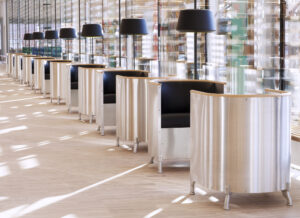
Sleeping and eating in Swedish design – in Småland
PM & Vanner in Växjö
Per Bengtsson transformed an old bank building in the heart of Växjö into a design hotel With a rooftop pool and a Michelin-starred restaurant, the founder's philosophy is shaped by forests, lakes, and meadows. Local materials and furniture were used in the hotel rooms, and the restaurant uses regional and organic products. The former bank vault, located in the basement of the building, is now a wine cellar where Per stores more than 20.000 bottles in the old filing cabinets.
Warehouse in Kalmar

In an old ship warehouse from 1920 on the Ölandkade in Kalmar, designer Jangir Maddadi (who fled Iran 13 years ago) founded his restaurant with its own minimalist designs. The meals are composed of locally sourced ingredients.
Scandic in Värnamo

The rooms of this couple of decades old design hotel The furniture in the center of Värnamo is decorated by local artists and furniture designers. Details from the 1950s have been preserved. Värnamo and the surrounding area are known as a "furniture paradise" due to the large concentration of furniture designers.
Toftalholm Herrgård in Vittaryd

Classic Swedish design can be found in this old country house From the 19th century, situated on a lake. You'll sleep like a prince or princess and eat like a king or queen in the award-winning restaurant. It also features a waterfront sauna.
IKEA Hotell in Älmhult
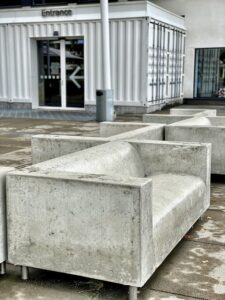

Next to the IKEA Museum you will find the IKEA HotelThe hotel room is furnished simply with IKEA furniture, of course, but you can brighten it up with accessories from the shared living room and kitchen on each floor. There's also a restaurant and laundry facilities.